Back to blog
Back to Case Studies
Lumi 3.0 | Ask your hardest, most open-ended questions
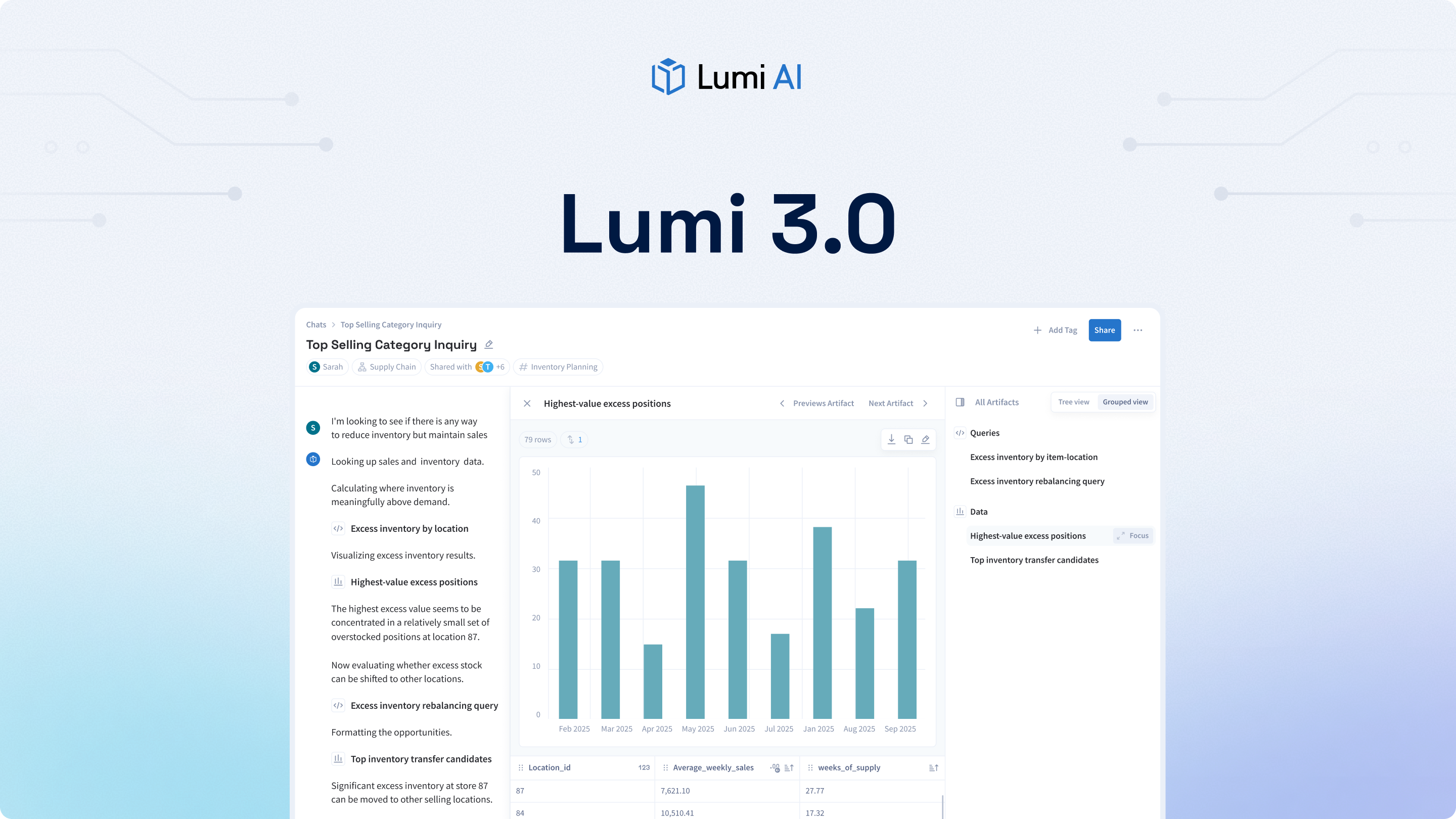

Get deep answers on open-ended, multi-step questions
Lumi 3.0 is our biggest release yet. It is built to take on open-ended, multi-part questions, even ones dependent on a prior result, working through them in a single run and comparing outputs as it builds toward a complete answer.
Every result becomes a living document you can build on, one you can edit yourself or hand back to Lumi to keep refining. Every version is saved and easy to revert to, and your team can comment on and validate insights, all within the same thread.
What's New
Lumi 3.0 introduces several core capabilities built for thorough, editable, and trustworthy analysis, right within everyday workflows.
- Multi-step reasoning: Lumi works through several angles of a question on its own, then pulls them together into one complete answer.
- Persistent artifacts: Every result, a table, chart, query, or written response, is now a persistent artifact you can return to, rather than a message that remains in it’s spot within the thread.
- Direct editing: Users can edit any output themselves, from a chart to a query, and hand it back to the agents to continue from that edited version.
- Version control: Track every version of an artifact and revert back anytime.
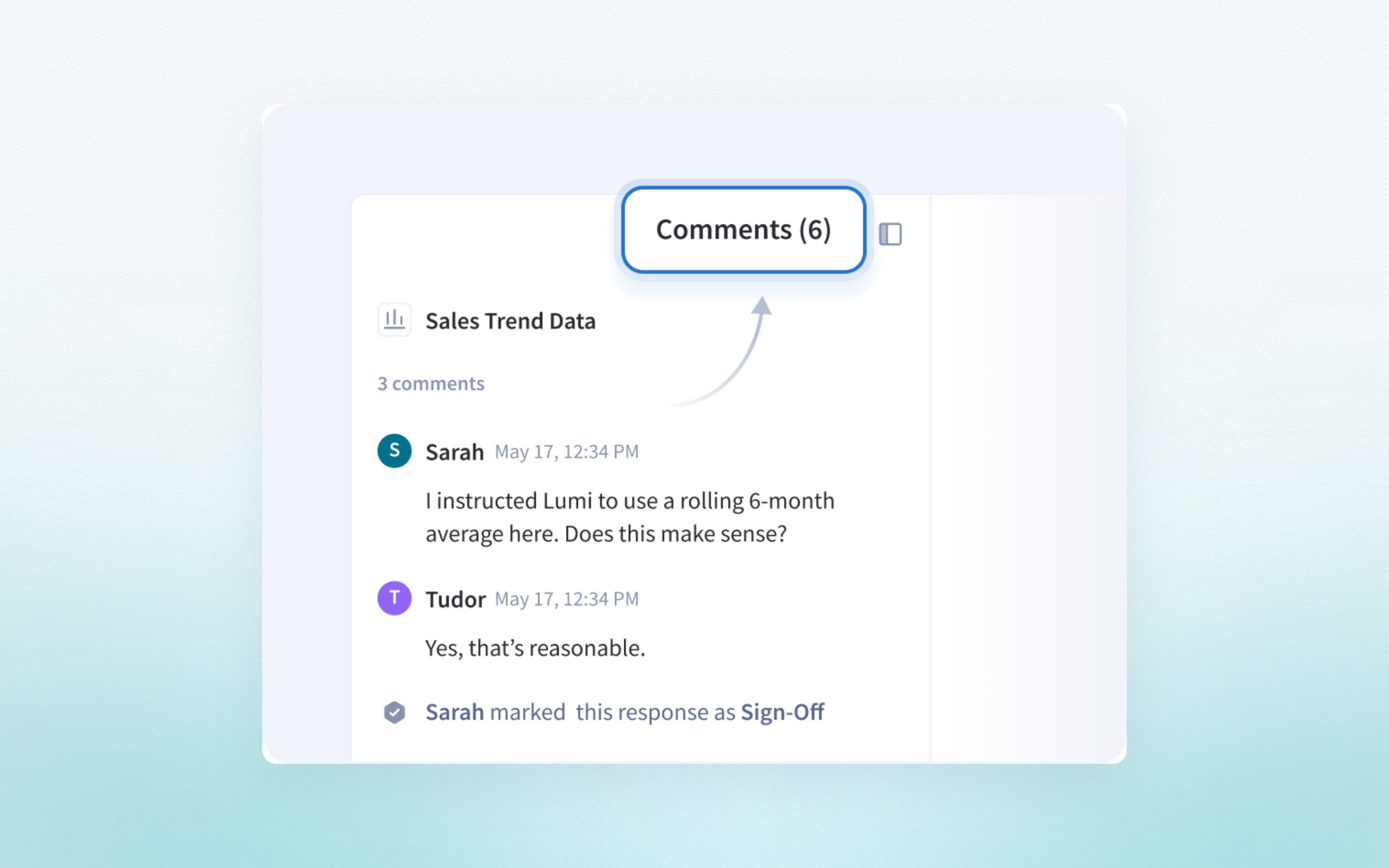
- In-thread comments and review: Teams can discuss, question, approve, or refine a specific artifact directly in the chat, without needing to switch to a separate review module.
Multi-Step Analysis
Business questions are often vague, multi-part, or dependent on a prior result, and answering them well means keeping pace with that complexity.
Lumi 3.0 is designed to support more sophisticated analysis. Users can ask questions that require multiple steps, compare different outputs, and build toward a more complete answer over time. This also sets the stage for a more connected experience where insights from across a business, structured and unstructured, come together in a single view.
A prompt like "find me opportunities to free up working capital" is now a single run. Demo below.
Persistent Artifacts
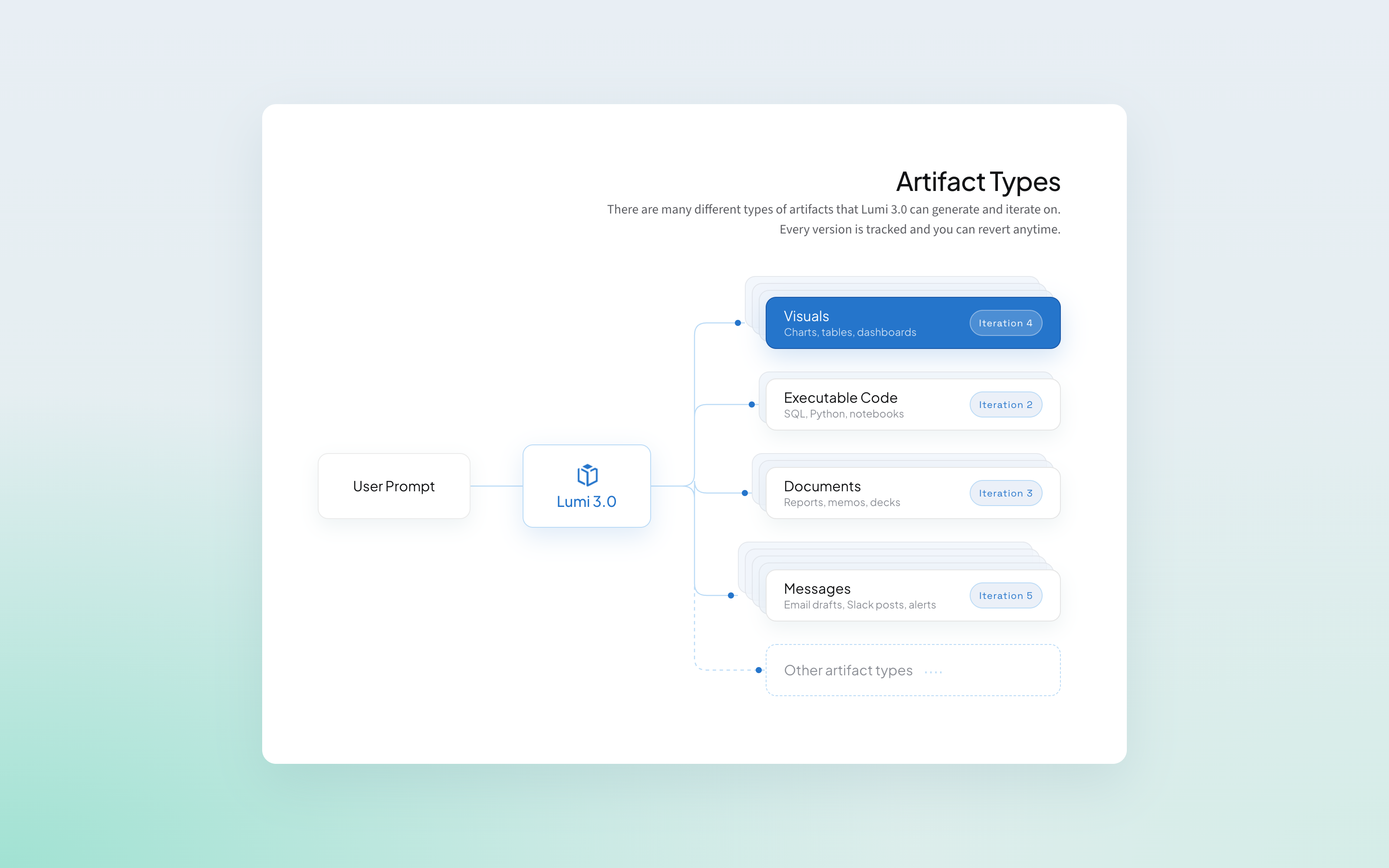
At the heart of Lumi 3.0 is a new concept: artifacts. Artifacts are persistent, editable outputs that can take the form of a table, chart, query, or written response, and eventually richer formats like PDFs and other documents. Because artifacts persist as real objects in the conversation, users can point directly at them to adjust a visual, update a table, or return to a prior output.
Artifacts turn every result into a living document instead of just a message or chart.
Direct Editing
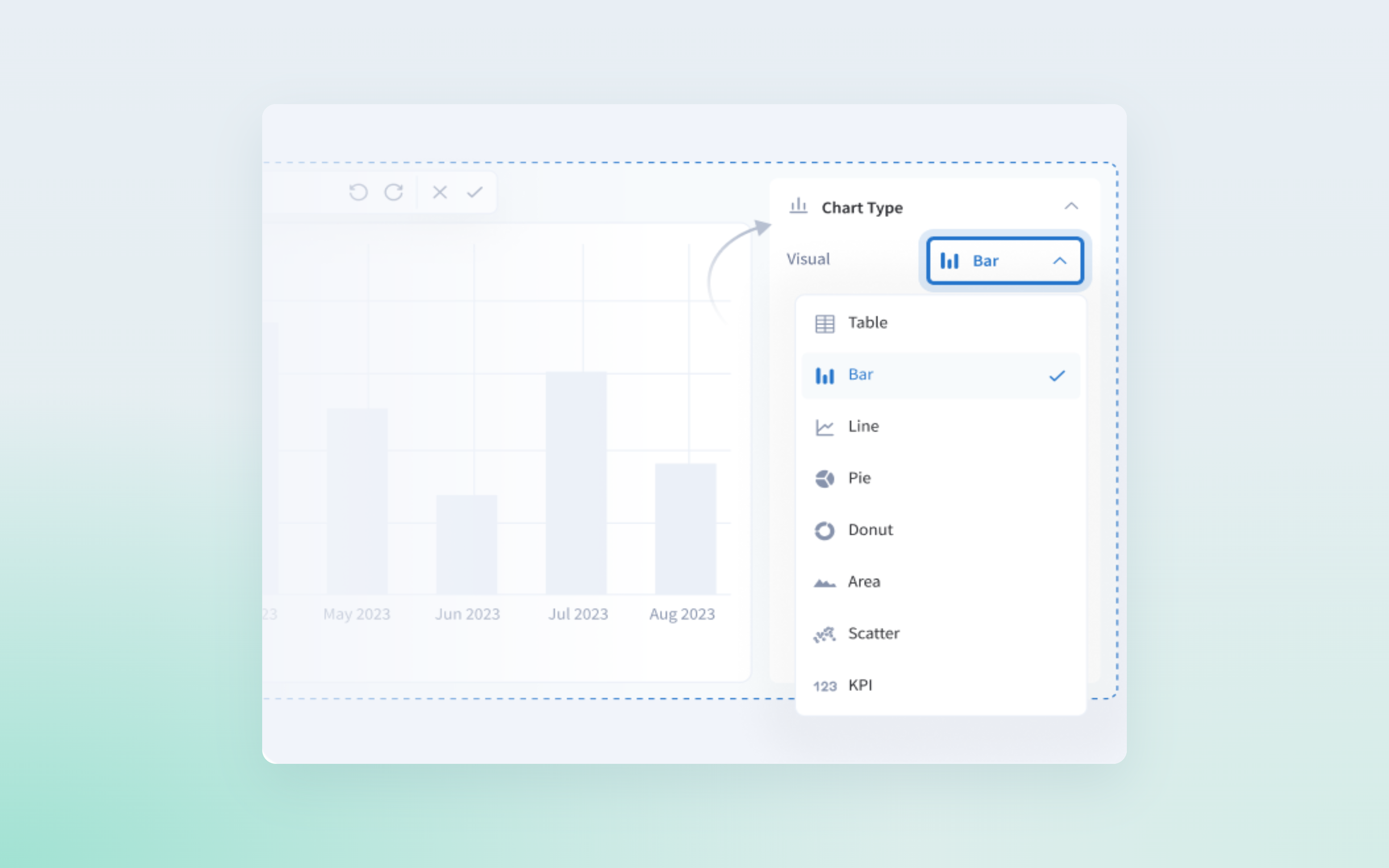
Lumi 3.0 lets users move fluidly between asking the AI to make a change and making it themselves. A user might ask Lumi to generate a visual, manually adjust part of it, then ask the AI to continue from that edited version, without losing any prior progress.
Direct editing keeps users in control of the details while still benefiting from an agentic workflow that can pick up where they left off.
In-Thread Collaboration
Lumi 3.0 expands collaboration by allowing commentary and verification to happen directly alongside the relevant artifact or response. Users can discuss, question, approve, or refine specific outputs in context, right in the thread.
In-thread collaboration makes feedback easier to track and helps teams understand exactly which part of an analysis a comment refers to.
Built for How Teams Actually Work
In practice, teams need analysis that can evolve as questions come up. Lumi 3.0 is designed for exactly that: analysis that adapts as a conversation develops.
Multi-step reasoning, direct editing, persistent artifacts, and in-thread collaboration make analysis easier to perform, build on, and refine, all without losing the transparency and trust users have come to expect.
Lumi 3.0 is rolling out now, and we're excited to see how teams use it to ask bigger questions and get richer answers. Start your journey with Lumi 3.0

Make Better, Faster Decisions.
Join Our Newsletter
Subscribe for the latest on self-service analytics, AI, and data-driven transformations.